Blepharoplasty in Carmel & Indianapolis
Refresh tired, drooping eyes with upper and lower eyelid surgery by Dr. John Aker. Upper blepharoplasty may be covered by insurance when vision is impaired.
What Is Blepharoplasty (Eyelid Surgery)?
Blepharoplasty is eyelid surgery that removes excess skin, fat, and muscle from the upper and/or lower eyelids. It is one of the most commonly performed facial plastic surgery procedures — and among the most impactful for rejuvenating the overall appearance of the face.
Upper blepharoplasty addresses drooping upper lids that can make a person appear tired, older, or even impair peripheral vision. Lower blepharoplasty targets puffiness and under-eye bags caused by herniated fat pads, as well as excess lower lid skin that creates a wrinkled or aged appearance.
Dr. Aker performs both upper and lower blepharoplasty, and can perform both in a single session when indicated. The procedure is performed under local anesthesia with sedation or general anesthesia and typically takes 1–2 hours.
Blepharoplasty Technique
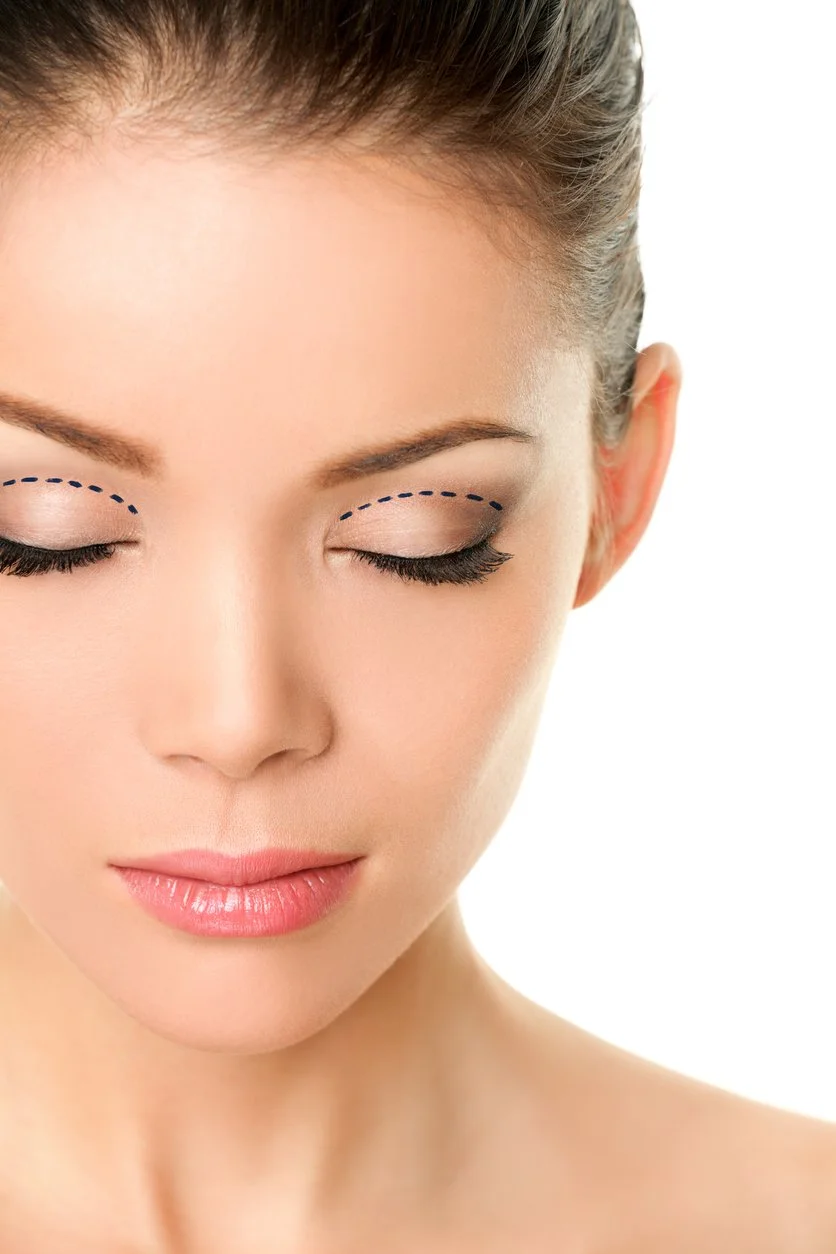
For upper blepharoplasty, the incision is placed precisely in the natural upper eyelid crease, making the resulting scar virtually invisible when healed. Excess skin and, if necessary, underlying fat and muscle are removed. The incision is closed with fine sutures that are removed within one week.
For lower blepharoplasty, Dr. Aker uses either a transcutaneous (external) or transconjunctival (internal) approach depending on the patient's anatomy. The transconjunctival approach leaves no external scar and is preferred when fat removal or repositioning is the primary goal. When excess skin is also present, a conservative skin excision may be made just below the lower lash line.
Who Is a Candidate for Blepharoplasty?
Good candidates for eyelid surgery include those with the following. Patients with thyroid conditions, dry eye syndrome, or glaucoma require additional evaluation, and Dr. Aker will review your full medical history at consultation.
- Drooping or heavy upper eyelids that create a tired or aged appearance
- Upper eyelid excess that impairs peripheral or superior visual field (may qualify for insurance coverage)
- Puffy lower eyelid bags from herniated fat
- Excess lower eyelid skin causing wrinkling or creasing
- Good general health and realistic expectations
- Non-smokers or willing to stop nicotine well before surgery
You Don't Recover Alone
After surgery, you're driven to our dedicated recovery suite at Home2 Suites by Hilton in Carmel, where one of our caregivers — Evelyn, Lori, or Charmaine — meets you in the lobby and provides monitored overnight care, with a direct line to Dr. Aker, Dr. Beckman, and PA Amanda. You're never sent home to an empty house.
Learn About the Recovery SuiteBlepharoplasty Recovery Timeline
Recovery is steady, with the eyes settling over several weeks. What to expect:
- Days 1–3: swelling, bruising, and mild soreness; cold compresses and head elevation help
- Days 3–5: reading and screen time limited as the eyes recover; avoid contact lenses
- Week 1: sutures removed (upper lid); most patients comfortable returning to light activities
- Weeks 1–2: return to work and social activities possible for most patients
- 4–6 weeks: final results visible as all swelling resolves; scars continue to fade
Blepharoplasty Cost in Indiana
Upper eyelid blepharoplasty typically ranges from $4,000–$8,000, and combined upper and lower blepharoplasty from $6,000–$10,000. Upper blepharoplasty may be covered by insurance if vision impairment is documented. A consultation is required for a personalized quote — financing options available.
Related Procedures

Frequently Asked Questions
Is blepharoplasty covered by insurance?
How long does blepharoplasty last?
Will I have visible scars after blepharoplasty?
Can blepharoplasty be performed with other procedures?
What is recovery like for blepharoplasty?
Ready to Refresh Your Eyes?
Schedule your consultation with Dr. John Aker or Dr. Di Beckman in Carmel, Indiana. 4.8★ rated · board-certified · 30+ years of experience.